




Somewhere in your point of sale system, your delivery schedule and an old spreadsheet sits a list of people who already trusted you with a sofa, a dining set or a mattress. Most furniture stores email that list a few times a year with a sale announcement, watch the results fade and decide email does not work for furniture.
It does work. Email and SMS is routinely a 20 to 30 percent revenue channel for furniture retailers that run it properly. The difference is not the subject lines. It is that the stores getting that result stopped treating email as a megaphone for sales and started treating it as a system of timed, relevant messages to people at specific moments in their life with your furniture.
This post shows where the hidden revenue sits, how to find and clean the list you already own, and the six flows that turn a quiet list into repeat business in a category where most customers buy only now and then.
The short answer
A furniture store email list holds revenue in four places: past buyers who will furnish another room, buyers whose mattress or cushions will wear out, open quotes that stalled, and shoppers waiting for the right sale. Unlock it by collecting every name you already have, confirming consent, cleaning out dead addresses and segmenting by what people bought and when. Then build six automated flows: post purchase, complete the room, purchase anniversary, replacement reminders, open quote follow up and a single win back. Add campaigns around the furniture sale calendar. Judge it on attributed sales in your CRM, not opens.
Why a furniture list goes quiet, and what it is worth
Furniture is bought infrequently, so owners assume a past buyer is done buying. That is rarely true. The family that bought a living room set moves on to the dining room, then the guest bedroom, then outdoor furniture when the patio finally gets finished. A mattress buyer becomes a mattress buyer again. And a happy customer refers a neighbor, a sibling or a coworker who is furnishing a new place.
Lists go quiet for predictable reasons. Every email is a generic blast. Nobody owns the list. Sends happen only when there is a sale, so the list hears from you three times a year, always asking for money. Engagement drops, inbox providers notice, and more of your mail goes to spam, which makes the next send weaker still.
The fix is relevance and rhythm: the right message to the right segment at the right moment, sent automatically.
Find and clean the list you already own
Before you write a single email, gather every name you have a right to contact.
Look everywhere. Your point of sale or order system, delivery and service records, quote requests, financing applications, website forms, showroom guest books, event signups and online orders. Most stores find their list is far larger than the one in their email platform, and far messier.
Confirm consent. Email marketing needs a clear unsubscribe link and your store's physical address in every message, and you must honor opt outs. Texting needs its own explicit consent. A customer who gave you a phone number for delivery has not agreed to receive marketing texts. If you are unsure whether a group of names opted in, ask them once before adding them to regular sends.
Authenticate your sending domain. Gmail and Yahoo now require bulk senders to authenticate their mail with SPF, DKIM and DMARC and to offer an easy unsubscribe. If those records are missing, fix them first, or much of your work will never reach an inbox.
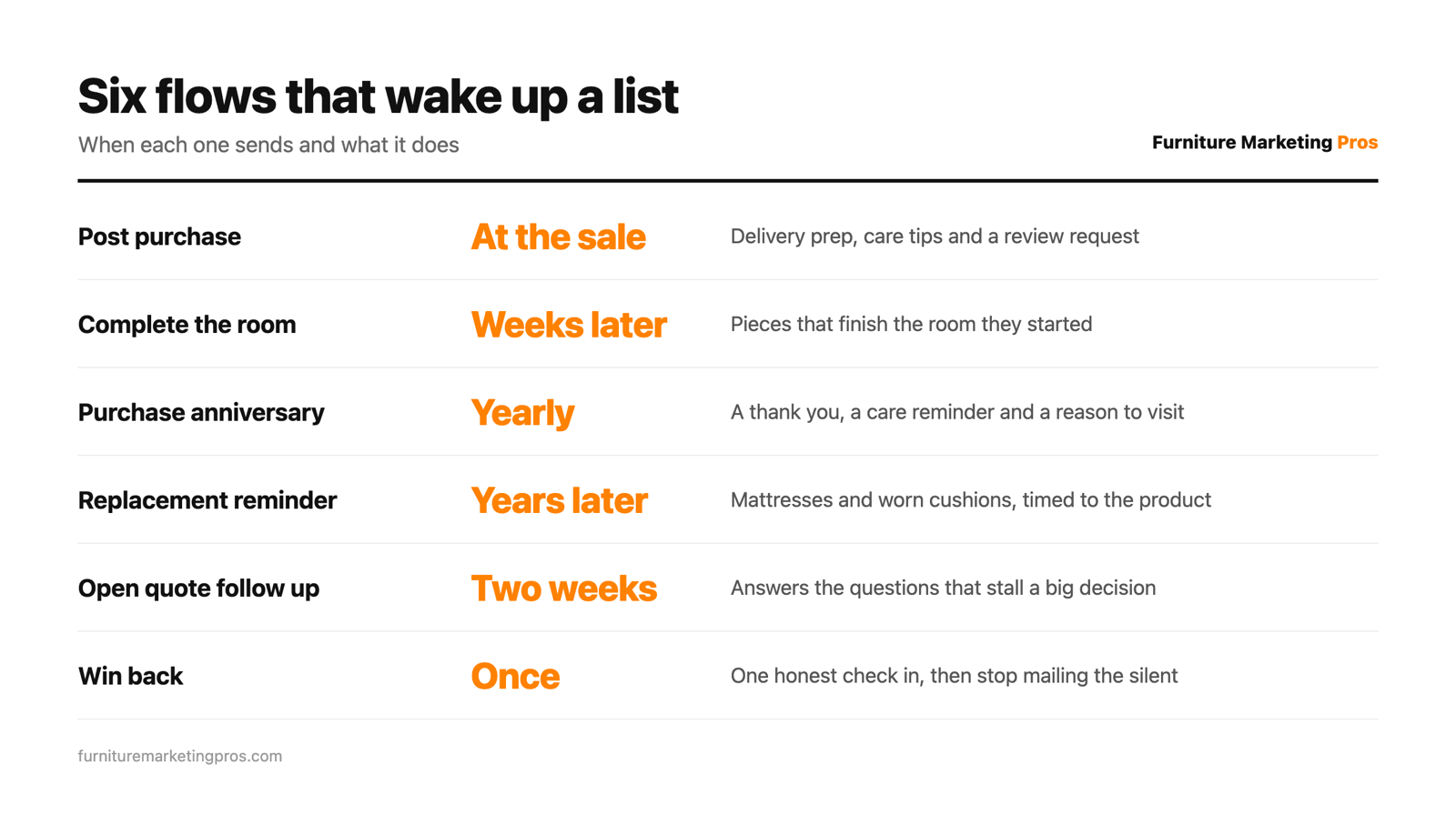
Wake up the dormant names carefully. Old addresses that have not opened anything in a long time hurt your deliverability. Send them one honest check in, such as asking whether they still want to hear about new arrivals and sales, then stop mailing the ones who stay silent. It feels like shrinking the list. In practice it makes every later send reach more people.
If your list is still small, our post on building an email list for your furniture store covers capture at the showroom and on the site.
Segment by what people bought and when
A list that is not segmented gets one generic blast, and generic blasts train people to ignore you. Furniture segments are simple because the purchase record tells you so much.
Past buyers by category. Living room, bedroom, dining, mattresses, outdoor and home office. What someone bought tells you what they have not bought yet.
Past buyers by date. Recent buyers need care and delivery follow up. Buyers from a few years ago are ready for the next room or a replacement.
Open quotes and showroom visitors. People who asked for a price or walked the floor and did not buy. They are mid decision, and the furniture decision typically takes two to twelve weeks.
Financing customers. People who bought on a payment plan, who may respond to financing offers on their next purchase.
Value. Your highest spending customers deserve early access and a personal touch, not the same blast as everyone else.
All of this depends on your customer records living in one place with purchase history attached. A CRM built for furniture retail keeps orders, quotes, visits and messages together so segments build themselves rather than being rebuilt by hand before every send.
The post purchase sequence
The most valuable flow starts the moment a customer pays, because that is when they trust you most and worry most.
Before delivery. Confirm the order, explain how delivery works, remind them to measure doorways and stairs, and tell them who to contact with questions. This cuts anxious calls and failed deliveries, and it sets the tone for everything after.
Delivery day. A short thank you, care basics for the materials they bought, and the warranty details in plain words.
The review request. Ask for the review right after delivery, when the new piece is in the room and the customer is happiest, not at the register weeks earlier. Our guide to getting more positive reviews for your furniture store covers the timing and wording.
A few weeks later. A check in asking how the piece is living, with care tips for the specific product. This is also where a referral ask fits naturally.
The post purchase sequence sells little directly. Its job is trust, reviews and referrals, and it makes every later email more welcome. If you also want a welcome flow for new subscribers who have not bought yet, see how to create an automated email welcome series.
Complete the room
Almost nobody buys a whole room at once. A customer who bought a sofa often still needs the chair, the coffee table, the rug or the lighting, and they would rather buy pieces that match from the store that sold them the sofa.
Build this flow by category. A few weeks after a sofa delivery, show the pieces designed to sit with it: matching chairs, the tables in the same finish, the rug your designers would pair with that fabric. After a bed, show the nightstands, dresser and the mattress if they did not buy one. After a dining table, show the chairs, the buffet and the lighting.
Use real photos of those pieces together, ideally in a room your customers would recognize, and invite them to bring a photo of their space to the showroom for help. Real products in real rooms beat catalog renders in email just as they do in ads. When a financing program applies, show the price as a monthly payment beside the full price.
Anniversaries and replacement reminders
Two flows use the calendar to bring people back years after the sale.
The purchase anniversary. Once a year, thank the customer, remind them how to care for what they bought and give them a reason to visit, such as new arrivals in the category they have not bought yet or early access to an upcoming sale. It is a small message that keeps your store the one they think of first.
Replacement reminders. Mattresses, recliners, outdoor cushions and upholstered seating wear out. Time a reminder to the replacement window your sleep and product experts recommend, and make it useful: how to tell when a mattress has reached the end of its life, and an invitation to come in and test what has changed. Mattress buyers in particular respond to a store that remembers what they bought and when.
These two flows are where the hidden revenue in an old list lives, because they reach buyers you would otherwise never hear from again.
Follow up on open quotes and showroom visits
Your warmest prospects are not past buyers. They are the people who asked for a quote or walked the floor in the last few weeks and have not decided.
When a quote goes out or a visitor leaves contact details, start a short sequence. Resend the quote with photos of the pieces. Answer the questions that usually stall a furniture decision: delivery timing, fabric samples, financing and returns. Offer a second visit with the same salesperson. Keep it personal, and let a reply go straight to a person, not a no reply address.
Pair this with paid retargeting so the same shopper sees your pieces in their social feed while they weigh the decision. We cover that side in retargeting for furniture stores. Google captures demand, Meta creates it, and email and SMS keep it.
Seasonal campaigns that respect the list
Flows run in the background. Campaigns are the sends you plan around the furniture calendar: Presidents Day, tax refund season, Memorial Day, Fourth of July, Labor Day, Black Friday and the run into December.
Segment the offer. Send the outdoor sale to people who have patios or bought outdoor before, the mattress event to mattress buyers and shoppers, and the dining promotion to the people who bought a living room last year.
Give past buyers early access. A day or two before the public sale, a short private window rewards loyalty and fills the first days of the event.
Coordinate with your ads. The same offer, the same dates and the same creative across email, SMS, the website and paid media. Our holiday and seasonal paid ad calendar maps those windows month by month.
Do not let campaigns crowd out flows. A list that only hears about sales learns to wait for sales. The relationship emails between campaigns are what make campaigns land.
Measure revenue, not opens
Opens have become an unreliable measure since privacy features in some email apps began loading messages automatically, so do not run your email program on open rates.
Track what matters to a furniture retailer. Attributed sales by flow and campaign, matched in your CRM to actual orders, including showroom sales from people who clicked an email first. Booked appointments and showroom visits that came from email or text. Repeat purchase rate among past buyers. List health: unsubscribes, spam complaints and bounces.
Then improve one flow at a time. Change the timing, the products shown or the offer, and compare results over comparable periods.
Turning the list into a revenue channel
Most furniture stores already own the most profitable audience they will ever market to. The work is gathering it, cleaning it and building the flows that keep it buying. That is what our email and SMS marketing for furniture stores does, with every flow written for long research cycles, high tickets, financing and delivery. If you would like to know how much revenue is sitting in your list, book a strategy call and we will look at it with you.
Key takeaways
- Email and SMS is routinely a 20 to 30 percent revenue channel for furniture retailers that run it properly.
- Gather every name you already own, confirm consent and authenticate your sending domain before you send.
- Send dormant addresses one honest check in, then stop mailing the ones who stay silent.
- Segment by category, purchase date, open quotes, financing and value, so every send is relevant.
- Build six flows: post purchase, complete the room, purchase anniversary, replacement reminders, open quote follow up and win back.
- Plan segmented campaigns around the furniture sale calendar and coordinate them with your ads.
- Measure attributed sales, appointments and repeat purchases in your CRM, not open rates.
Frequently asked questions
How often should a furniture store email its list?
Automated flows send when a customer's situation calls for it, so their timing takes care of itself. For campaigns, a steady rhythm around the sale calendar with useful content between sales works better than long silences broken by bursts of discounts.
What emails drive the most repeat business for furniture stores?
Complete the room emails after a purchase, purchase anniversary messages and replacement reminders for mattresses and upholstered pieces bring past buyers back most reliably. The post purchase sequence earns reviews and referrals that make every later email more welcome.
Should I delete old email addresses from my list?
Send long inactive addresses one clear check in first, and stop mailing the ones who stay silent. Mailing dead addresses hurts your deliverability, so a smaller, engaged list usually reaches more inboxes than a large, stale one.
Can I text customers who gave me their number for delivery?
Not for marketing without separate, explicit consent to receive marketing texts. Ask for that consent clearly at the sale or on your website, and keep a record of it in your CRM.
How do I know if my email marketing is working?
Match email and text clicks to actual orders and showroom visits in your CRM, and track repeat purchase rate among past buyers. Revenue and appointments are the measure, not opens or clicks on their own.